
The short answer: after the Warm Homes Plan cut in the 28 October Budget, most homeowners asking about solar will not get a grant, and the ones who might were always a narrow group: low-income households in homes rated below EPC band C. So stop selling around grants. Sell on what this roof can do, the fixed 31 March 2027 VAT date, and the government-backed Warm Homes Loan.
Disclosure: I run Solar Mailshot, so I am not neutral. The sales advice below works whatever marketing you use.
What did the Budget change, and what didn't it?
The Budget on 28 October 2026 cut £1bn from the Warm Homes Plan to help cover a shortfall in defence spending (Carbon Brief, Construction News). The plan had promised £15bn of grants and loans for up to 5 million households, covering heat pumps, rooftop solar and insulation.
| What the Budget did | |
|---|---|
| Warm Homes Plan | £1bn cut to help fund defence |
| Heat pump funding | Around £800m less than previously announced, which Carbon Brief estimates could mean around 100,000 fewer heat pumps over three years |
| Boiler Upgrade Scheme | Keeps £400m in 2027-28, then rises broadly with inflation |
| Low-income grants through councils | The government says "most" of this funding will be protected, with no figures given |
| 0% VAT on solar and batteries | Not extended: still ends 31 March 2027, then 5% |
| Warm Homes Loan Scheme | Launched the day before the Budget; up to £15,000 for solar and up to £15,000 for a battery |
Sources: Carbon Brief, Construction News, MoneySavingExpert.
The detail of exactly which schemes lose what has not been published. If anyone tells you a specific grant has closed, check the scheme's own page before you repeat it to a customer.
Who could get a Warm Homes Plan grant for solar anyway?
Fewer people than the headlines suggested. The Warm Homes Plan policy paper says the fully funded grants are for "low-income households living in homes with an Energy Performance Certificate (EPC) rating below band C", delivered through the Warm Homes: Local Grant and Social Housing Fund before they are merged into one scheme (GOV.UK). Around £5bn to 2030 was set aside for that group, and solar PV with batteries is one of the measures it can pay for.
Everyone else was always going to be offered a loan, not a grant. The same paper describes "a new zero and low-interest loan offer" for households outside the low-income scheme.
So the homeowner who says "I'll wait for the government grant" is usually a working household in a reasonable home. They were unlikely to qualify before the Budget. After it, the pot is smaller and the timetable less certain.
Should a homeowner wait for a grant? How to answer honestly
Do not tell people grants have gone, because they have not, and do not tell them they won't qualify, because you don't know their income. Give them the facts and let them decide:
- Ask, don't assume. "Have you checked whether you qualify for your council's Warm Homes grant?" If they are on a low income in a draughty home, point them to the council. That is the honest thing to do, and they will remember it.
- Explain who the grants are for. Low-income households in homes rated below EPC C. Most of your enquiries will not be in that group.
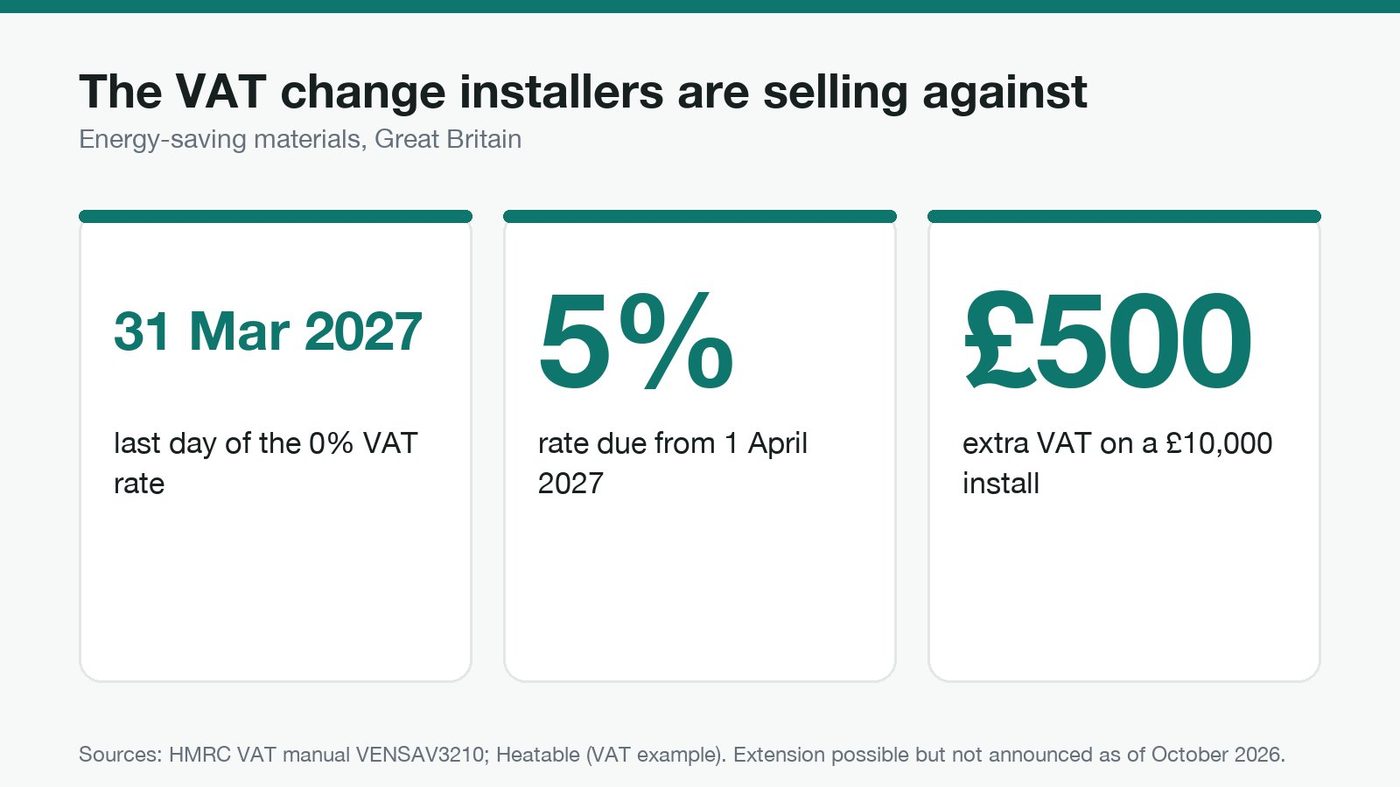
- Name the cost of waiting. The 0% VAT rate on solar and batteries ends on 31 March 2027 and the Budget did not extend it (Carbon Brief, Tax Journal). Waiting for a grant that may not come could mean paying VAT that would not have applied.
- Offer the alternative. If cash up front is the real blocker, the Warm Homes Loan Scheme exists for exactly that.
Then stop. Pushing harder makes it sound like you are worried about your own pipeline, not their bills.
Three hooks that don't depend on grants
1. The roof's own numbers
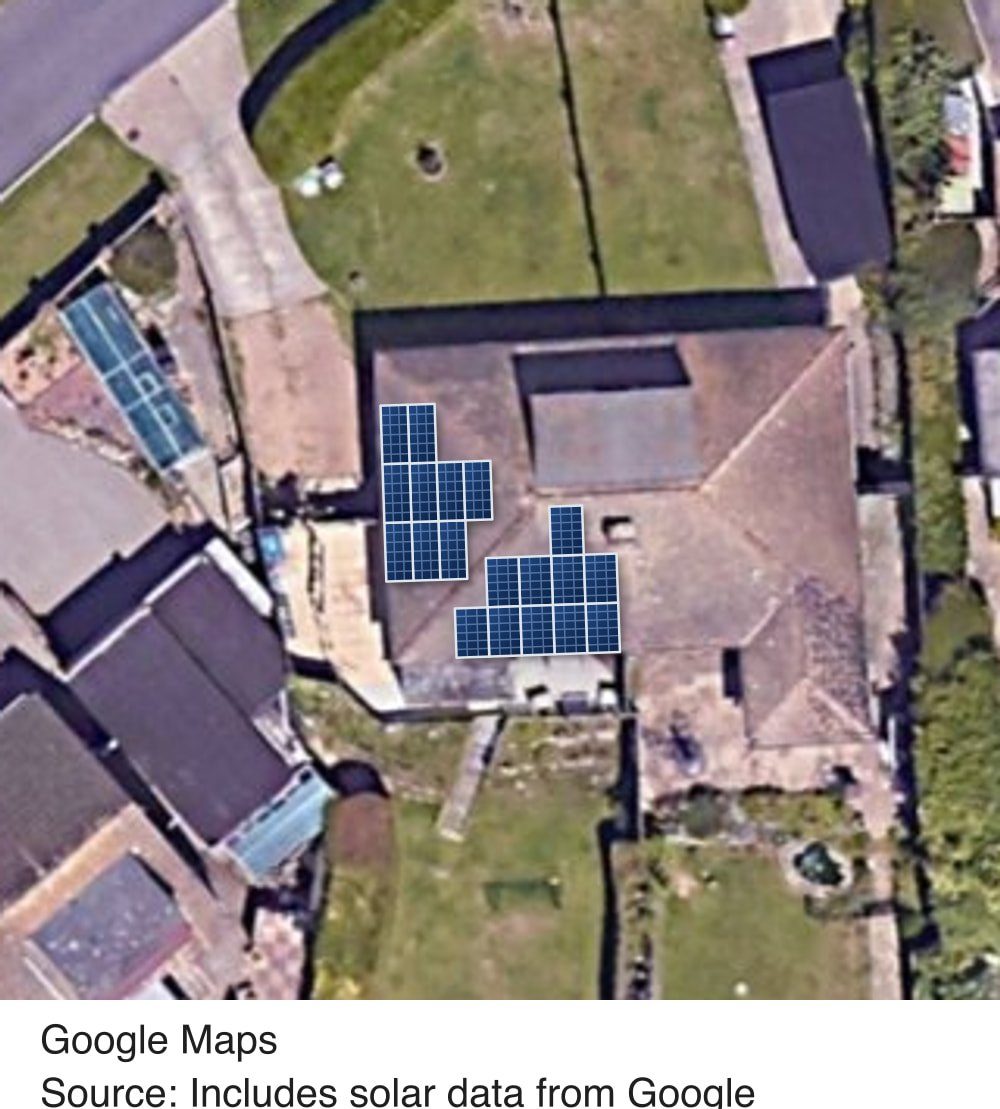
A grant is about the government. A roof is about the house. Lead with what this home's roof could produce, from its own size, pitch and direction, rather than a national average. When you show the figure, show your working and label any savings sum "not a forecast", because what a household saves depends on its usage, export and tariff. My post on the solar payback objection covers that conversation in detail.
2. The 31 March 2027 VAT date
This date is fixed in law and the Budget left it alone. Simple arithmetic, not a forecast: on a £10,000 install, 5% VAT adds £500. The key dates are in my earlier post on the April 2027 VAT change.
Be careful how you use it. Installs take time to survey, schedule and fit, so tell homeowners the deadline is about when the work is done, and check the VAT timing rules with your accountant before you promise anything about a deposit date. A deadline that sounds like a sales trick puts people off; a deadline explained plainly helps them plan.
3. The Warm Homes Loan
For households who will not get a grant, the loan is the government's actual offer. Up to £15,000 for solar and up to £15,000 for a battery, from ten named lenders, some at 0%, with terms from three years (MoneySavingExpert). The lender sets the rate and decides who qualifies, so never promise either. My post on selling with the Warm Homes Loan Scheme covers the quote rules and the wording to use.
A line that works in letters and on calls: "Government grants are for low-income households. For most homes, the government's offer is the Warm Homes Loan, and the 0% VAT rate runs until 31 March 2027."
How Solar Mailshot solves this
The Warm Homes Plan cut creates two problems for installers: homeowners delaying in the hope of a grant, and generic "government-funded solar" adverts that now ring hollow. A letter built around the home's own roof avoids both.
| Problem | The usual way | With Solar Mailshot |
|---|---|---|
| Homeowners waiting for a grant | Leaflets that lead with "government funding" | A personalised letter that leads with the home's own roof from above, with panels drawn on and estimated generation, so the reason to act is the house, not a scheme |
| Wasted effort on roofs that won't work | Mail or knock on every door | Roofs graded from LiDAR roof data by usable area, pitch and direction, so you choose which grades to mail |
| Homes that can't take solar | Pay to reach flats and unsuitable homes | Non-viable homes (flats, known council property and similar) removed before you pay |
| Homes that already have panels | A wasted letter or visit | After payment every home gets a second, visual check; if panels are spotted the home is removed and the credit goes back to you |
| Competing with other installers for the same homeowner | Shared leads sold to several firms | Homes you mail through Targeted Mailshot are reserved for you for 6 months and removed from other installers' searches |
| No time to run a campaign before March | Chase a printer, stuff envelopes | We print and post: 1 credit = 1 letter, pay as you go from £1.30 to £2.50 per credit, no subscription, no contract (provisional pricing) |

To be clear about the trade-offs: Solar Mailshot does not arrange grants or finance, does not know who qualifies for either, and does not guarantee enquiries or jobs. A letter costs more per piece than a leaflet. What it does is put a well-graded roof in front of the homeowner, with your name, your MCS logo and an honest finance line on the page.
The best first campaign is Tell the Neighbours: after an install, the best 30 roofs on your install's road for £75 (provisional pricing). A finished job down the street is a better reason to act than a grant that may never arrive. When you are ready to scale, own your territory with solar direct mail, read more about solar leads, or go back to the homepage.
What should you do this week?
- Take "government grant" wording out of your adverts, leaflets and website unless you are actually delivering a council grant scheme.
- Write a two-line answer to "should I wait for a grant?" and make sure everyone who takes calls uses it.
- Add the Warm Homes Loan and the 31 March 2027 VAT date to your quotes and letters, with no rates or monthly figures.
- Count back from 31 March: how many installs can you fit between now and then, and how many quotes does that need?
- Book follow-up calls with anyone who told you this year they were waiting for a grant.
Solar Mailshot is opening soon. Join the waitlist for early access.
Sources
- Carbon Brief: UK budget 2026, key climate and energy announcements (28 October 2026)
- Construction News: Warm Homes loses £1bn as government redirects capital spending to defence (28 October 2026)
- GOV.UK: Warm Homes Plan policy paper
- MoneySavingExpert: Warm Homes Loan Scheme launches (October 2026)
- Tax Journal: VAT relief for energy-saving materials to be extended (13 December 2023)