
The short answer: the solar payback objection ("I read it takes 15 years") is based on a national average for panels alone. A battery run by smart software that charges when power is cheap and exports when the grid pays most can add hundreds of pounds a year on top. E.ON says its service is worth close to £300 a year compared with exporting through the Smart Export Guarantee alone. So answer with that home's roof, that home's usage and a battery strategy, and label the sums "not a forecast".
Disclosure: I run Solar Mailshot, so I am not neutral. The sales advice below works whatever marketing you use.
Where does the "15 years" figure come from?
On 22 October 2026, Renewable Energy Magazine reported results from The Eco Experts' Solar Satisfaction Awards survey. UK homeowners with solar saved an average of £462.70 a year on their energy bills, and the article worked out that it "could take the average household almost 15 years (14.55 to be precise) to break even" (Renewable Energy Magazine).
That headline will reach your prospects. Before you argue with it, know what it is:
- It is an average across very different homes, roofs and systems.
- It is a savings figure. The article does not break out how many owners had a battery or which tariff they were on.
- It is backward looking. It reflects what owners saved, not what a well set-up system could save on today's tariffs.
The same survey also found that nearly 23% of homeowners installed solar mainly to boost their home's value, so payback is not the only reason people buy. But for most homeowners it is the question that stalls the quote.
Octopus Energy, which designs and sells systems itself, puts it differently: "a solar system can pay back its cost in 9–13 years, depending on where you live", and says the answer depends on household electricity use, roof size and orientation, and "whether your system includes a battery" (Octopus Energy). Two respected sources, two different ranges. That spread is your opening.
What does smart battery software actually do?
A battery on its own stores daytime solar for the evening. Smart battery software goes further: it looks ahead and decides when to charge, when to hold and when to sell.
The better systems work from three inputs:
- A solar forecast for tomorrow, from weather data.
- A usage forecast, learned from how the household has used power before.
- Tariff prices, which on smart tariffs change through the day.
From those it builds a plan. If tomorrow looks dull, it tops the battery up overnight at the cheap rate. If tomorrow looks sunny, it leaves room for the solar. When prices peak, usually late afternoon and early evening, it runs the house from the battery or exports to the grid at the higher rate.
Here is what is available in the UK now:
| Service | What it does | Figures the provider gives |
|---|---|---|
| E.ON Next Optimise | Combined home energy management service and dynamic tariff. Charges the battery when prices are low and uses or exports stored energy when prices rise, following wholesale rates | Pilot average of around £18 a month; modelled at close to £300 a year compared with exporting only through the SEG |
| Intelligent Octopus Flux | Octopus controls the battery to charge cheaply and export at the 16:00 to 19:00 peak | Says solar and battery customers "could earn up to £300 more than you pay for electricity" a year |
| Axle Energy | Links home batteries into a virtual power plant that exports together when the grid needs power | £1 for every kWh exported in grid events, at least £10 a month; events 3 to 6 times a month |
| Predbat | Free, open-source software for Home Assistant. Forecasts solar and household use, then plans charging and discharging around the tariff | Software only, no savings figure given |
Sources: E.ON, Octopus Energy, Axle Energy, Predbat on GitHub.
Read the small print before you quote any of them:
- E.ON's figures come from a 61-day winter window (27 December 2025 to 24 February 2026) for customers who had used the service for at least three months. That is a short period, during sharp wholesale price swings.
- Octopus says Intelligent Octopus Flux is "currently exclusive to customers who bought solar panels and a battery from us". If you are an independent installer, your customer cannot sign up to it today.
- Each service works only with certain inverter and battery brands. Check the lists before you specify kit.
Why does this matter for your sales now?
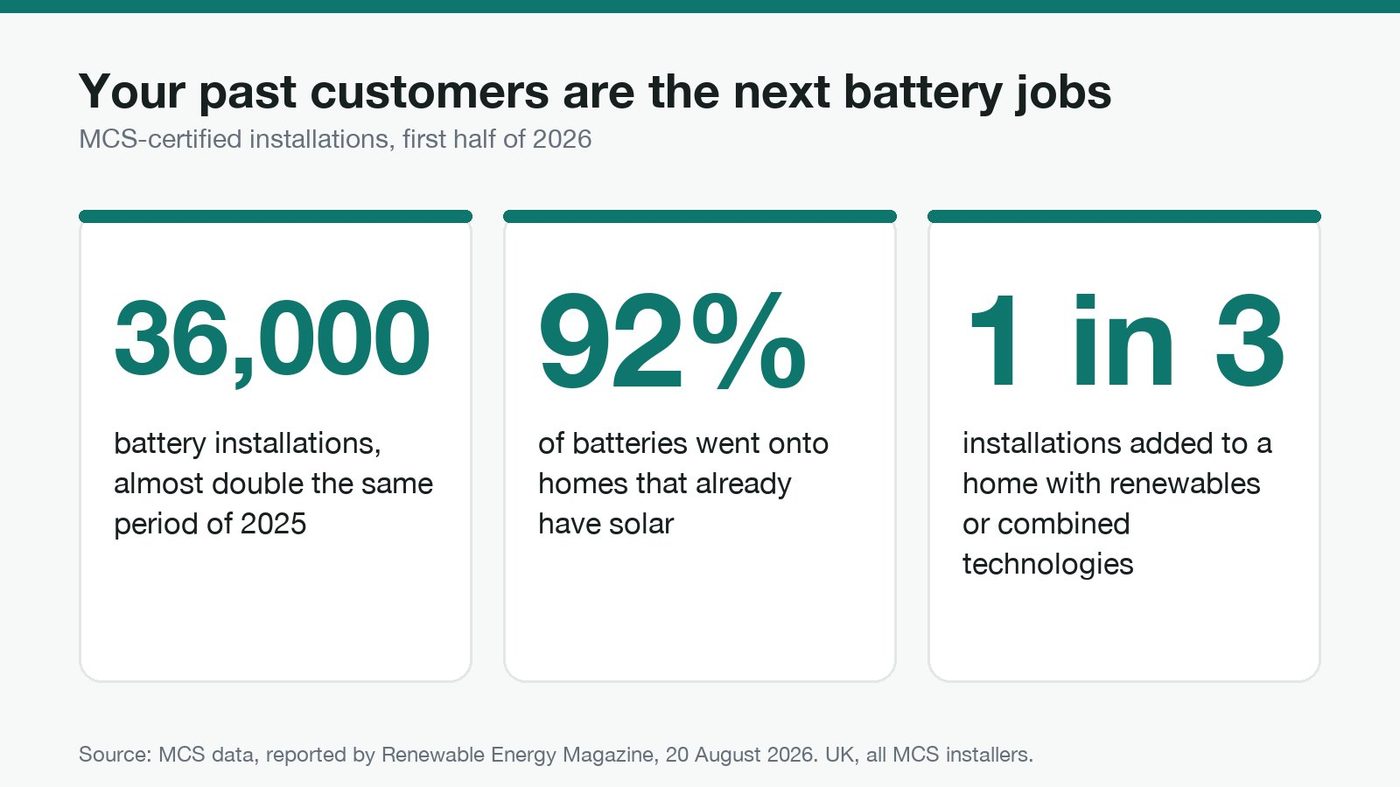
Because batteries are no longer an add-on most homeowners skip. MCS recorded 36,000 certified battery installations in the first half of 2026, almost double the same period of 2025, and close to 2025's full-year record of 40,000. 92% of those batteries went onto homes with solar panels (Renewable Energy Magazine).
Meanwhile 2026 is already a record year for rooftop solar, with 207,619 MCS-certified installations by mid-September (Solar Power Portal). Homeowners are comparing quotes, and the installer who can explain how the battery earns its keep has the stronger pitch.
How do you answer the solar payback objection?
1. Agree with the figure, then narrow it
"Yes, the average is about 15 years. That average includes homes with poor roofs, no battery and a basic export rate. Let's work out yours." You lose nothing by agreeing, and the homeowner stops bracing for a fight.
2. Use the payback sum in front of them
Payback is simple: total cost divided by yearly saving. Show it on paper. Here is an illustration, not a forecast, using round numbers:
| Panels only | Panels and smart-controlled battery | |
|---|---|---|
| Cost (illustrative) | £7,000 | £11,000 |
| Yearly saving (illustrative) | £500 | £1,000 |
| Payback | 14 years | 11 years |
The battery adds cost, so it only shortens payback if it adds enough saving. Put the homeowner's own quote, their own usage and the tariff they would actually use into the same three rows. If the battery does not pay its way on their numbers, say so. That honesty is what makes the rest of your quote believable.
3. Explain the battery in one sentence
"The battery fills up when power is cheap, from your panels or overnight, and the software sells or uses it when power is expensive." Most homeowners do not need more than that at the first visit.
4. Name the services, with their caveats
Mention the services that fit the kit you install, and give the source. Say that results vary and that the savings figures are the providers' own. Never promise a figure as if it were yours.
5. Put it in the quote
Homeowners share quotes with partners and family. Add a short section: the payback sum with their numbers, which smart tariff or service the battery is compatible with, and links to the provider pages. If the follow-up is where quotes go quiet, my 7 day follow-up sequence shows what to send and when.
6. Go back to your past customers
92% of batteries in the first half of 2026 went onto homes that already had solar. Your past panel-only customers are the easiest battery jobs you will get. Show them the same sum with their real generation figures.
How Solar Mailshot solves this
The payback objection is hardest when the conversation starts from a national average. It is easier when it starts from the home's own roof. That is the part Solar Mailshot handles.
| Problem | The usual way | With Solar Mailshot |
|---|---|---|
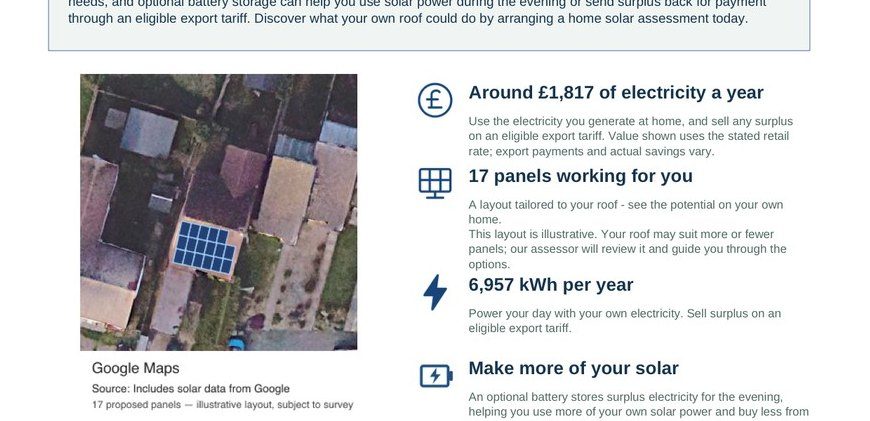
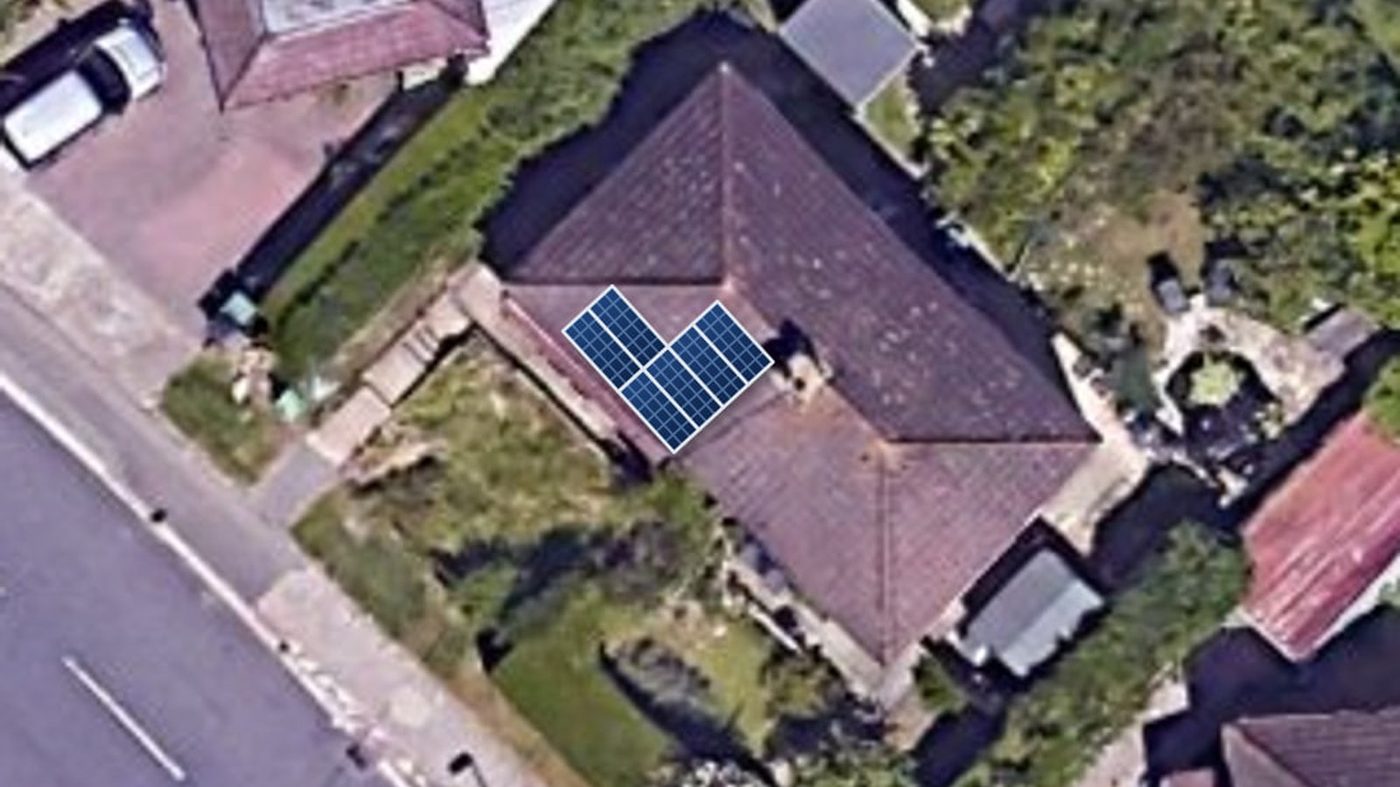
| Homeowner anchored on "15 years" | Generic leaflet with average savings | A personalised letter showing the home's own roof from above with panels drawn on, estimated generation and what that could be worth, so the first talk is about their house |
| Poor roofs drag the payback down | Mail or knock on a whole postcode | Roofs are graded from LiDAR roof data by usable area, pitch and direction, and you choose which grades to mail |
| Homes that will never convert | Pay to reach flats and unsuitable homes | Non-viable homes (flats, known council property and similar) are removed before you pay |
| Homes that already have panels | Waste a letter or a visit | After payment every home gets a second, visual check, and if panels are spotted the home is removed and the credit goes back to you |
| Competing with other installers on price | Shared leads sold to several firms | Homes you mail through Targeted Mailshot are reserved for you for 6 months and removed from other installers' searches |
| No time for marketing | Chase a printer, stuff envelopes | We print and post: 1 credit = 1 letter, pay as you go from £1.30 to £2.50 per credit, no subscription, no contract (provisional pricing) |
To be clear about what it does not do: a letter does not work out a homeowner's payback, and it does not guarantee enquiries or jobs. Batteries and tariffs are your expertise. What the letter does is put a well-graded roof in front of the right homeowner, so when you sit down with the payback sum, you are starting from a roof that suits solar.
After an install, Tell the Neighbours writes to the best roofs near the job, which is the best first campaign: the best 30 roofs on your install's road for £75 (provisional pricing). I wrote more about that in market the street after every install. You can also read about solar direct mail and solar leads, or go back to the homepage.
What should you do this week?
- Check which smart tariffs and battery services work with the inverters you install.
- Build a one-page payback sheet: cost, yearly saving and payback for panels only and for panels with a battery, labelled "not a forecast".
- Write your one-line answer to "15 years" and practise it.
- List your panel-only customers from the last three years and send them the battery sum.
Solar Mailshot is opening soon. Join the waitlist for early access.
Sources
- Renewable Energy Magazine: The Eco Experts Solar Satisfaction Awards survey on savings, payback and home value (22 October 2026)
- Octopus Energy: Solar savings explained: panels, batteries and smart tariffs (updated 20 October 2026)
- Octopus Energy: Intelligent Octopus Flux
- E.ON: E.ON Next rolls out Next Optimise, its new smart service for solar and battery homes, as pilot shows £18 monthly bill savings (30 March 2026)
- Axle Energy: home battery virtual power plant
- Predbat: home battery prediction and automatic charging for Home Assistant (GitHub)
- Renewable Energy Magazine: Record number of UK households combining renewables (MCS data, 20 August 2026)
- Solar Power Portal: 2026 'record year' for UK rooftop solar installations (16 September 2026)