
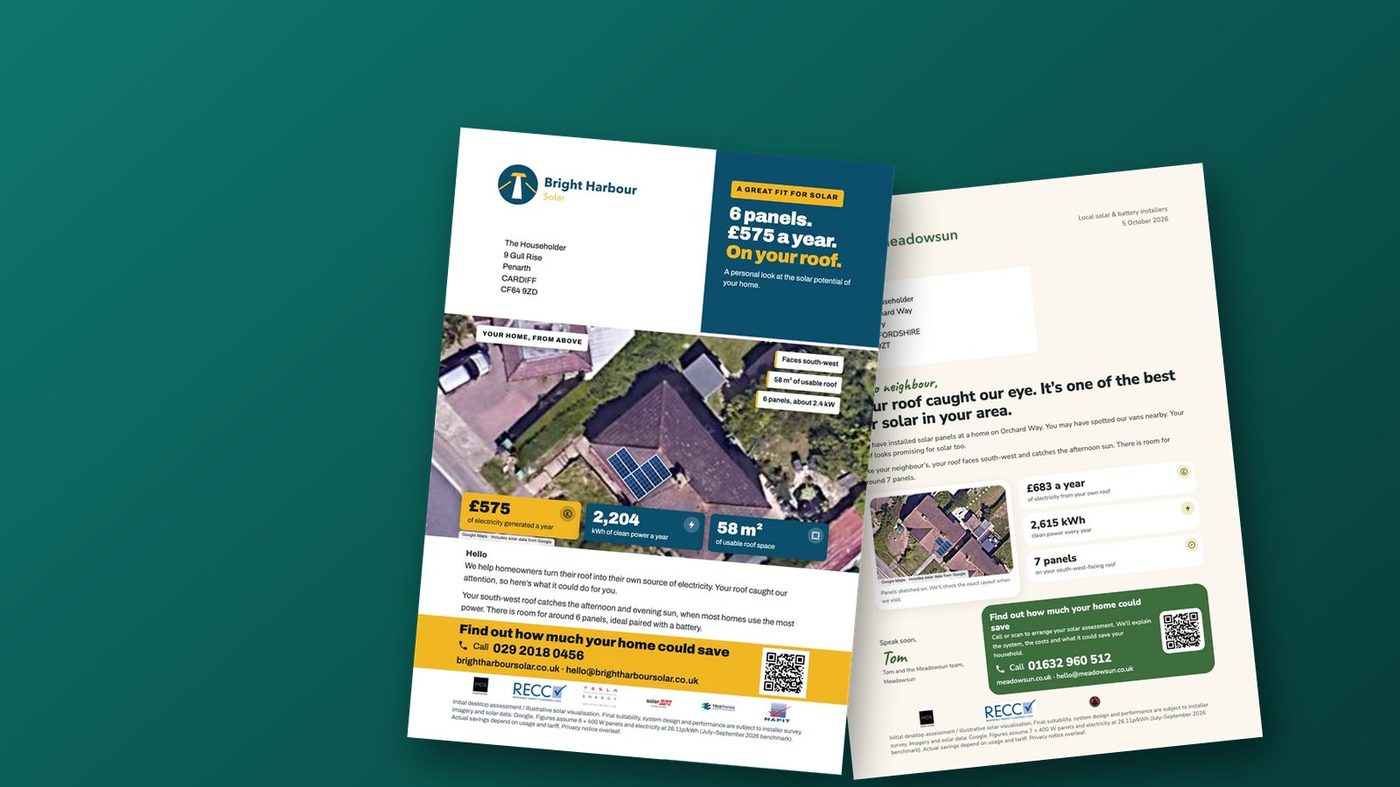
The short answer: the quickest way to reactivate old solar enquiries is to sort your list of missed opportunities, remove anyone who has since had solar fitted, and send the rest a personalised letter showing their own roof. Many of them wanted solar and the timing was wrong. A letter is a quiet, non-pushy way to start the conversation again.
Disclosure: I run Solar Mailshot, which sells a service called Mail Your Own List, so I am not neutral. Where I cite research I have said what it does and does not show.
Why are old solar enquiries worth going back to?
Look in your CRM, your inbox or the spreadsheet you started in 2023. Somewhere in there is a list of people who asked about solar and never signed. Some of them were never serious. But plenty were stopped by something that had nothing to do with whether they wanted solar:
- A new baby, a job change, a house move that fell through.
- A boiler that failed in the same month and took the budget.
- Waiting for prices to settle, or for the finance to make sense.
- A quote that landed in the wrong week and was never looked at again.
Life happens. The enquirer wants solar, but it just didn't happen.
There is research behind the idea that interest is not the problem. A Marley survey of 2,000 UK homeowners, published in July 2024, found 49% had considered investing in solar panels. Cost of the panels was named as the biggest barrier (61%), followed by a lack of understanding of how solar works (28%). That survey covers all homeowners, not people who have already contacted an installer, so treat it as context, not as a prediction for your list.
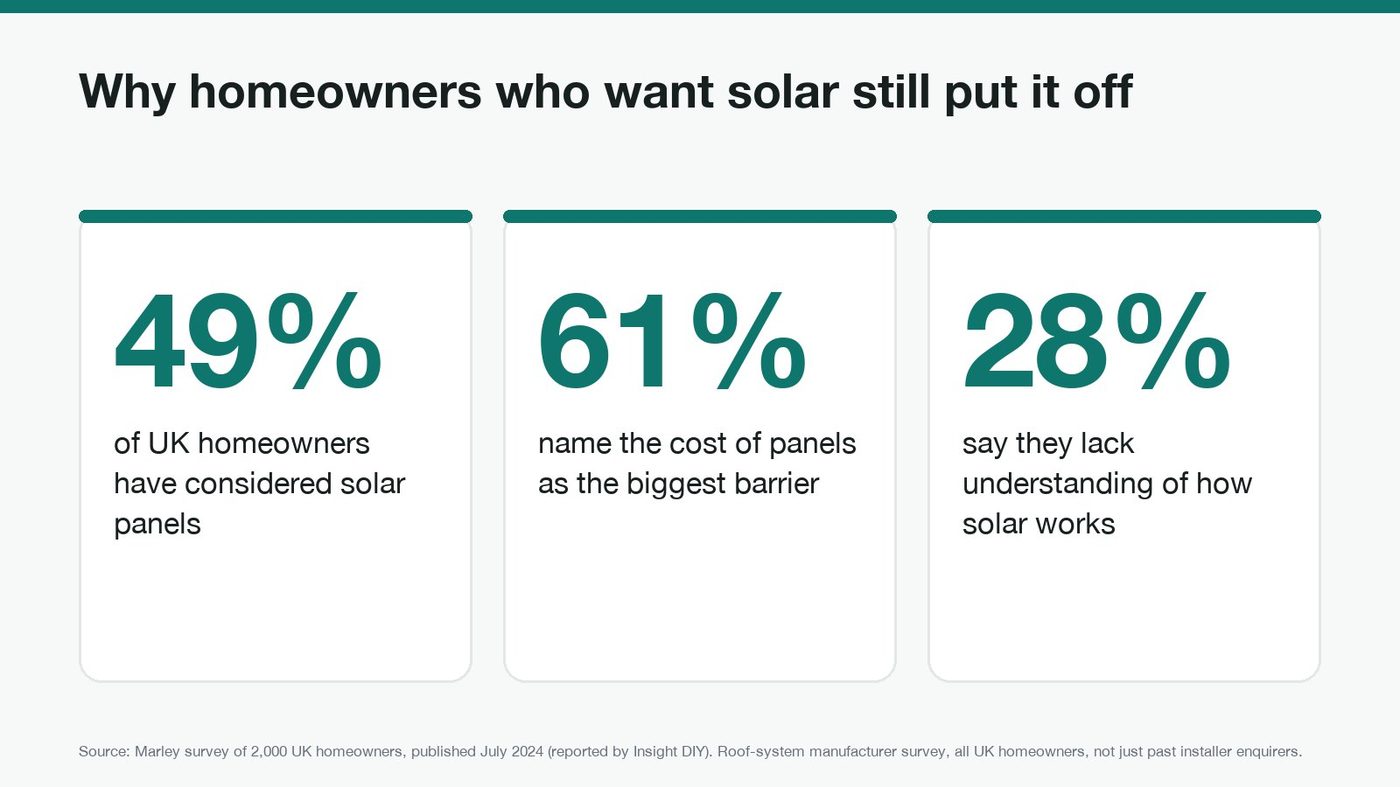
Notice that two of the three things on that list are things you can answer in writing: what solar would look like on their roof, and how it works.
You have already paid for these leads once
A shared lead costs roughly £15 to £50, an exclusive lead £18 to £150 and a Google Ads lead £80 to £250, according to the sources in our 2026 lead cost breakdown. Multiply that by the number of enquiries that went quiet. That is money already spent on people who raised their hand.
Most installers treat a stalled enquiry as dead after a few weeks. Going back to them costs far less than buying a new lead, and these people already know you exist.
How do you work out which old enquiries are worth chasing?
- Export everything. Enquiries, expired quotes and lost jobs from the last 12 to 36 months. Name and address are enough to start.
- Remove the obvious no's. Anyone who asked you to stop contacting them, anyone who told you they were not interested, anyone who has bought from you.
- Tag the reason, if you know it. Price, timing, finance, roof concerns, went quiet. You do not need to tag everyone, but a note on the strongest ones helps you write a better covering line.
- Check who has already gone solar. This is where most old lists waste money. Some of your missed opportunities were installed by a competitor months ago. Mailing them is a wasted stamp and an awkward letter.
- Check the roof. Some enquiries were for roofs that were never a good fit. There is no point reopening those.
Steps 4 and 5 are tedious to do by hand across hundreds of addresses. They are also the difference between a sensible reactivation campaign and an expensive mail-out.
Why is a letter a good way to reactivate a cold enquiry?
Because it is the least invasive option you have.
A phone call to someone who went quiet two years ago can feel like pressure. A text or email is just another message in a full inbox. A letter lands on the doormat, is read in their own time, and asks nothing of them.
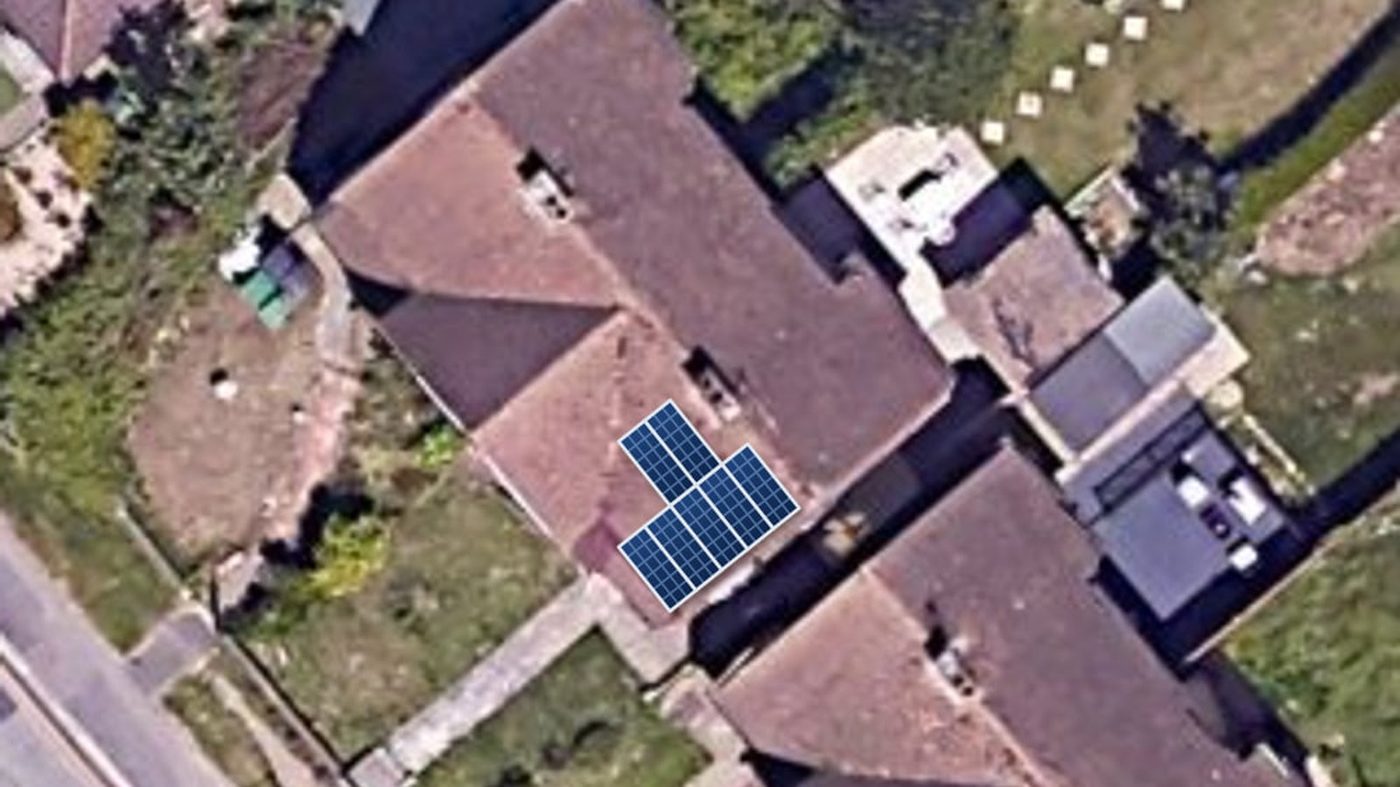
It also does something an email rarely does: it shows them their own roof. A personalised letter with panels drawn on the home's actual roof educates the homeowner about the potential, without a sales call. If the timing is right now, they ring you. If not, nothing is lost.
How Solar Mailshot solves this
Here is each problem with an old list, and what we do about it.
| The problem | The usual way | With Solar Mailshot |
|---|---|---|
| The list is a messy export | Hours of tidying in a spreadsheet | Upload any CSV, tidy or not, and we work out the columns. |
| Some homes already have solar from a competitor | You find out when the letter gets a puzzled reply, or never | Homes with existing solar are removed before you pay. After payment every home gets a second, visual check, and if panels are spotted the home is removed and the credit goes back to you. |
| Some roofs were never suitable | You send the same generic letter to everyone | We check the roofs using LiDAR roof data, and non-viable homes are removed to the best of our knowledge before you are charged. |
| A generic "are you still interested?" gets ignored | A mail merge with a name and a price | We produce the same personalised letter as a fresh prospect, showing that home's own roof. |
| The printing and posting | Doing it yourself, or paying an agency | We print and post it. |
| Your customer data | Left on suppliers' systems | We delete your list 30 days after mailing. |
| Cost | Retainers and set-up fees | Pay as you go. Credits are £1.30 to £2.50 each (provisional pricing), one credit is one printed and posted letter, no subscription and no contract. |
Some honest trade-offs. A letter costs more per piece than a leaflet or an email. Removals are based on the data available, so a small number of homes may still slip through. And a letter does not guarantee a reply or a sale: some of your list will have moved on, whatever you do. That is why the first step above, removing the obvious no's, still matters.
If you want an easy first campaign that does not need an old list at all, Tell the Neighbours mails the homes around a job you have just finished. You can read more about how personalised mail works on our solar direct mail page.
A simple way to test it
Pick a segment, not the whole list. Say your best 100 enquiries from the last 18 months, minus anyone who has gone solar. Work out the cost: 100 letters at £1.30 to £2.50 is £130 to £250 in credits. Then decide, before you send, how many installed jobs would make that worthwhile. That is simple arithmetic, not a forecast, and it gives you something to measure afterwards in cost per installed job rather than cost per lead.
What to do next
- Export your old enquiries and expired quotes.
- Remove anyone who asked you to stop, or who bought from you.
- Upload the rest and let the solar check strip out homes that already have panels or can't take them.
- Start small, measure by installed jobs, and repeat if it works.
If you have a list of missed opportunities gathering dust, it is probably the cheapest marketing you have not yet used. Solar Mailshot is opening soon: get early access to be among the first to upload your list.
Sources
- Insight DIY: Almost half of UK homeowners considering solar panels (Marley survey of 2,000 UK homeowners, July 2024)
- Solar Mailshot: Solar leads UK, what a lead really costs in 2026 (lead cost ranges, with their original sources listed there)