
The short answer: we built our own database of nearly 15 million roofs across mainland Britain from LiDAR roof data. Every roof is measured from the air, fitted to a real roof shape, matched to an address, checked for what kind of building it is, then graded A+, A, B or C for solar. That is how Solar Mailshot knows which homes are worth writing to before you spend a penny.
Every installer knows the best leads are good roofs owned by people who will say yes. But roof suitability is not on any list you can buy. So we built one. This is how.
What is LiDAR roof data?
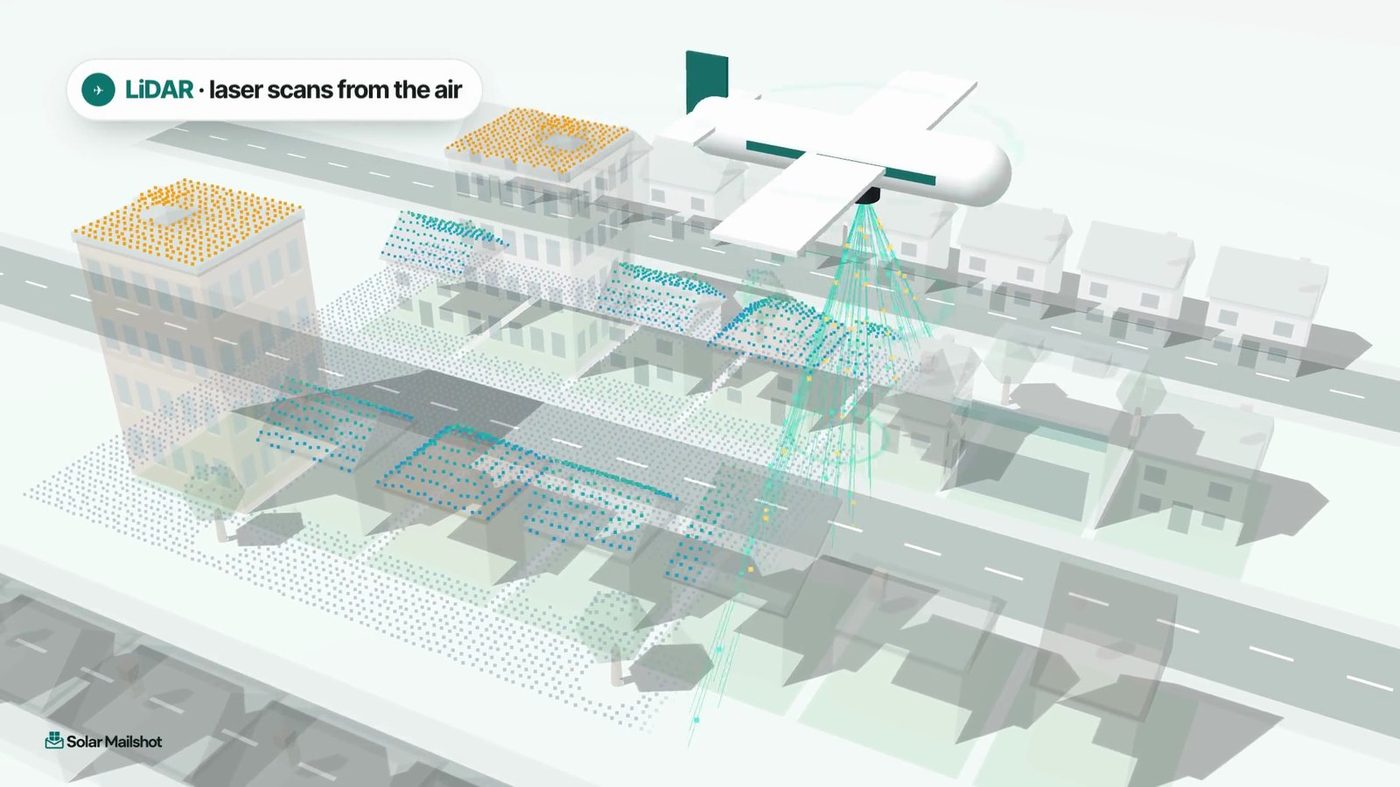
LiDAR stands for light detection and ranging. A survey plane flies over the country firing laser pulses at the ground and timing how long each one takes to bounce back. Each pulse is one measurement of height. Millions of them, a short distance apart, build a 3D picture of every street: the ground, the trees and the shape of every roof.
This is not new or experimental. In England, the Environment Agency's National LIDAR Programme has been flying the whole country, surveying in the winter months (roughly November to April) at 1 metre resolution and publishing the data openly. Similar public surveys cover Wales and Scotland.
What LiDAR does not give you is an answer. It is a cloud of height points. Turning that into "this house has a good south-facing roof and is worth a letter" is the work.
How do you turn laser points into roofs?
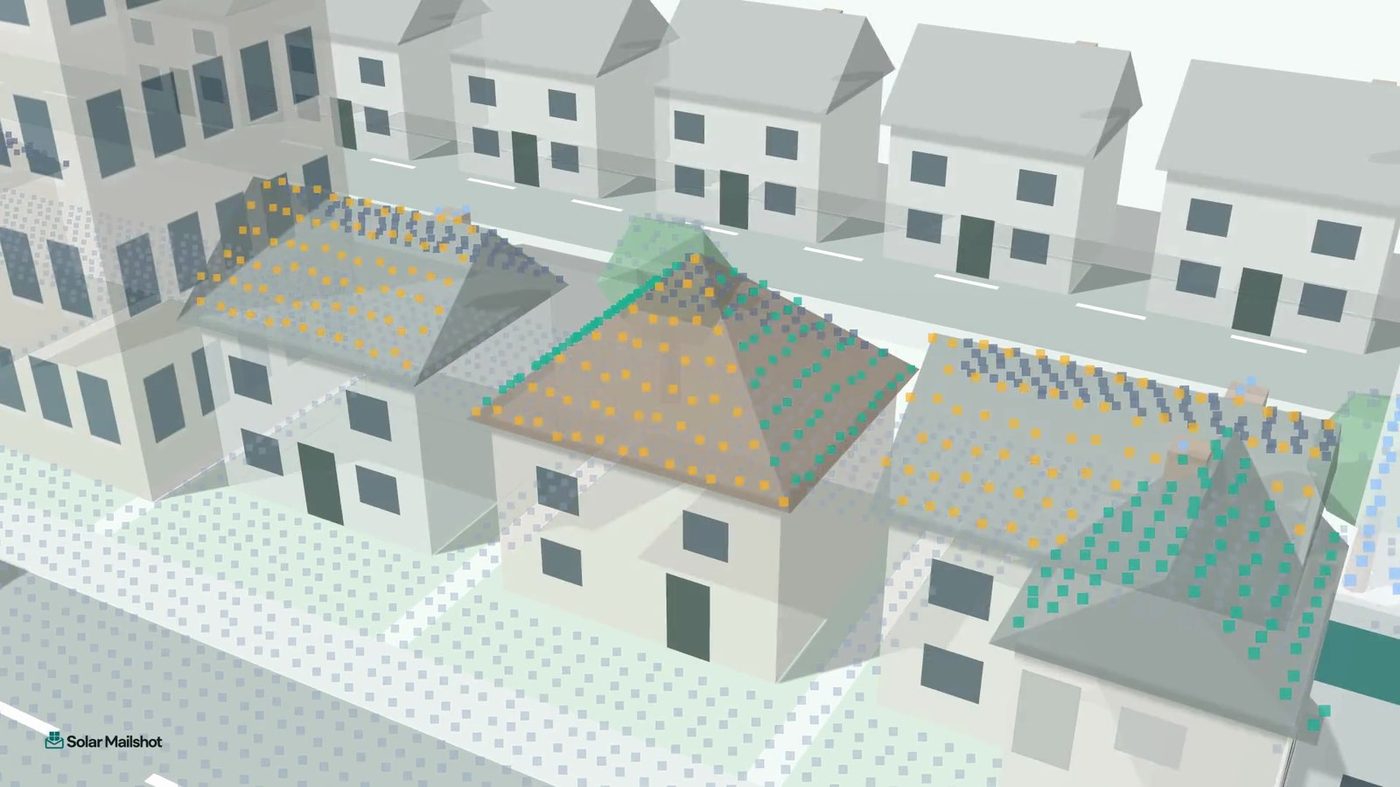
From the points we work out each roof's shape: its pitch, which way each face points and how much of it is usable for panels.
Points alone are not enough, though. Trees overhang, chimneys and dormers get in the way, and some roofs are only partly covered. So we fit each building to a real roof type, such as a gable or a hip, and flag any roof where the evidence is weak rather than guessing.
How does a roof become a home you can write to?
A roof is no use to you unless you can post a letter to it. So every roof is matched to a real address. That is the step that turns a map into a mailing list: each graded roof is a home with a door and a letterbox.
Which homes are removed, and why?
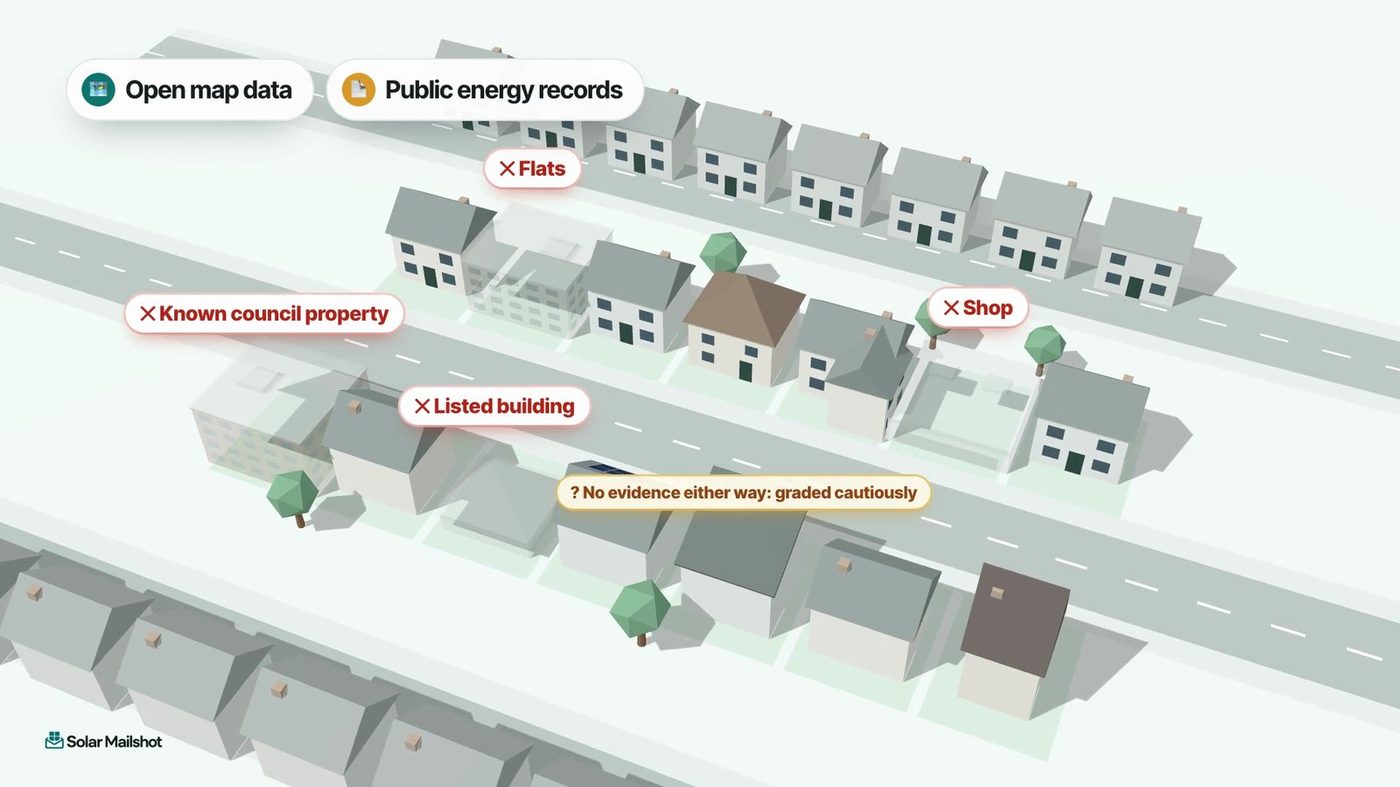
Then we ask what each building actually is. Open map data and public energy records tell homes apart from buildings that will never become a solar job for you. These come out before anything is graded:
- Flats, where one roof is shared and nobody can sign off a job on their own.
- Known council property.
- Listed and heritage buildings.
- Shops and other commercial property.
- Homes that already have solar panels.
- Roof shapes that will not take a sensible system.
Where there is no evidence either way, we stay cautious rather than assume a home is fine.
How is each roof graded?
What is left is graded A+, A, B or C, combining four things:
| What we look at | Why it matters |
|---|---|
| Usable roof area | How many panels will actually fit |
| Direction | South-facing roofs generate the most, so south counts most |
| Roof shape | Simple shapes suit panels best |
| Confidence in the data | How sure we are; weak evidence lowers the grade |
From that we estimate a system size and what it could generate and save. That estimate is what each homeowner sees in their letter, next to an aerial view of their own roof with panels drawn on.
It is a desktop estimate, not a survey, and the letter says so. Final suitability is confirmed at your own survey.
How big is the database?
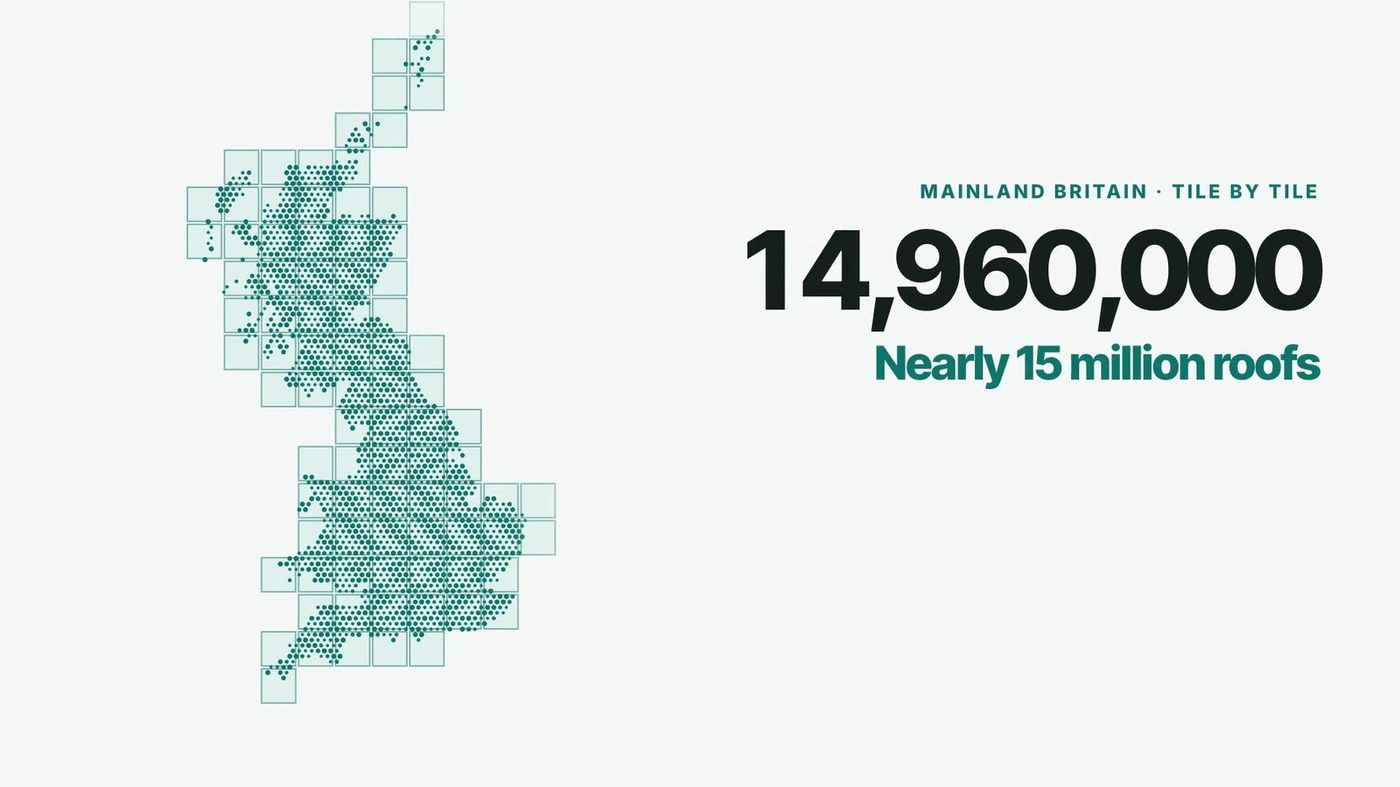
All of this is processed tile by tile across mainland Britain. The result is 14,960,000 roofs, nearly 15 million, mapped and graded in one searchable database. Pick a postcode, and every graded home around it appears in seconds.
And after you pay, every home gets a second look before anything is printed: a visual check for existing solar panels, and every address confirmed. Any home that does not pass is removed, and its credit comes back to you.
Why did we build it ourselves?
Because the usual ways of finding solar customers start in the wrong place.
- A shared lead starts with whoever filled in a form, often sold to several installers at once.
- A leaflet round starts with a postcode, and goes through every door on it.
- A Facebook ad starts with an audience profile, not a house.
None of them start with the roof, and the roof decides whether there is a job at all. We wanted every letter to go to a home where solar actually makes sense, and to show that homeowner their own roof. For that, the data had to exist first.
What this means for installers
This database is what sits behind every Solar Mailshot campaign:
| What installers struggle with | The usual way | With Solar Mailshot |
|---|---|---|
| Knowing which homes suit solar | Guess from the street, or survey first | Every roof graded A+ to C from LiDAR roof data before you spend |
| Wasting effort on homes that can't buy | Flats, existing solar and listed buildings get the same flyer | Removed before you pay, with a second check after payment |
| A message that says nothing about the house | "Solar could save you money" | A letter showing their own roof with panels drawn on and their own figures |
| Picking a patch | Postcode by postcode | Search a postcode or up to 15 miles around a point, and see every graded home |
| Making the most of every install | Meaning to door knock, never doing it | Tell the Neighbours: the best roofs around your install, in your name |
Want the full detail, with the exact grading thresholds? Read the deep dive: LiDAR roof analysis for solar: how we grade every UK roof. Want to see the process in two minutes? Watch how we grade roofs, or read why the street around your last install is your best audience.
The bottom line
The best solar leads are good roofs owned by people who will say yes. We cannot tell you who will say yes. We can tell you, for nearly 15 million homes, whose roof is worth the conversation, and put a letter about that roof through their door under your name.
Solar Mailshot is opening soon. Get early access and search your own patch the day we launch.