
The short answer: solar installer software UK installers are being offered, such as AI design and proposal platforms, makes quoting faster. It does not put new homeowners in front of you. Software works on the enquiries you already have, so if the pipeline before the quote is thin, a better quoting tool will not fill it.
Disclosure: I run Solar Mailshot, which sells personalised solar direct mail, so I am not neutral. I have kept the facts below to cited sources.
What did GreenSketch launch in the UK?
GreenSketch, a solar software company backed by Australian distributor OSW Group, launched in the UK at the end of September 2026. Solar Power Portal reports that its AI platform, called Emily, modelled solar and battery performance across 15 million UK property addresses (Solar Power Portal).
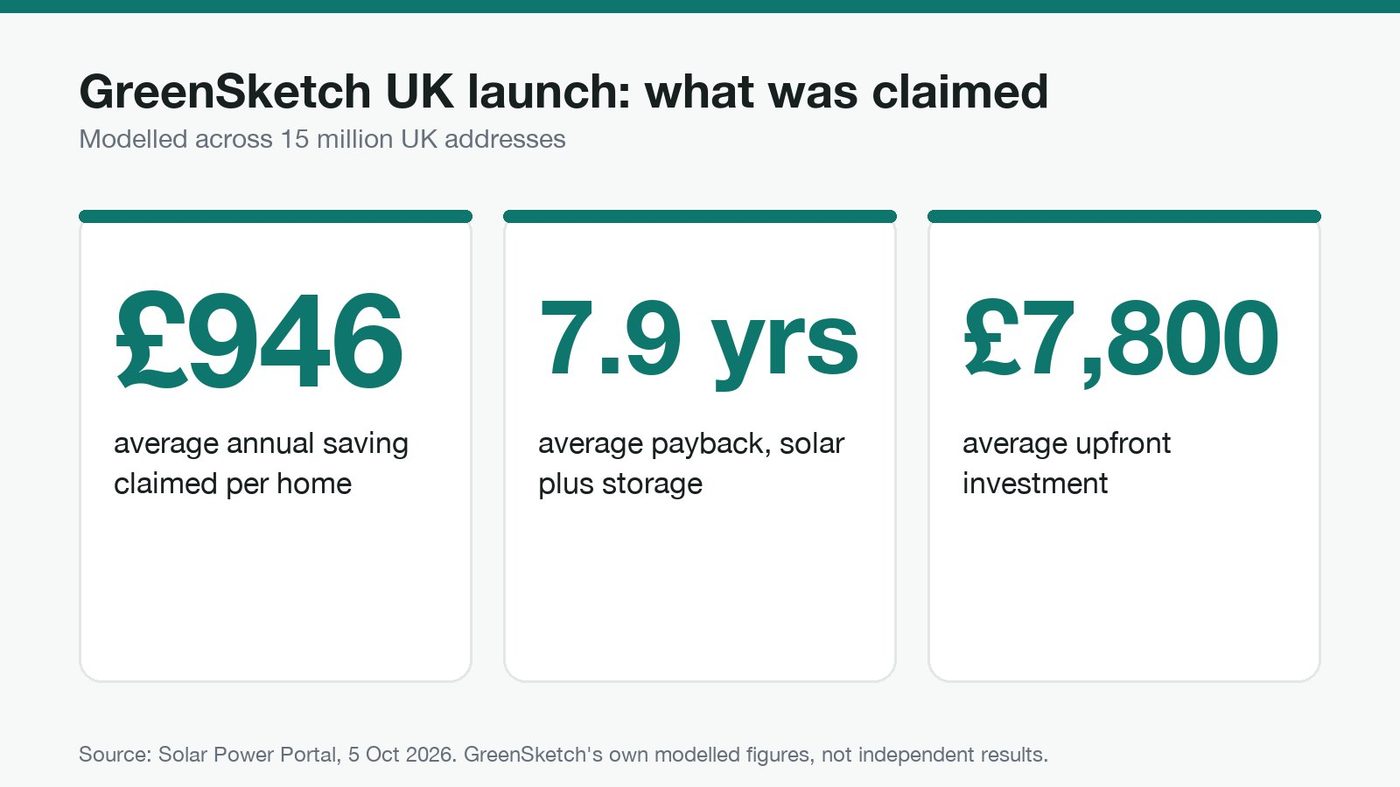
The headline claims: an average saving of £946 a year, an average payback of 7.9 years for solar plus storage, and an average upfront cost of £7,800. The platform has a consumer website, Energy Brain, and a tool for installers covering design, proposal, finance and delivery.
Can you trust a vendor's savings figures in your own marketing?
Treat them with care. The same report notes the research is produced by the company itself, and it is modelled data, not measured results from real homes. That does not make it wrong. It means you should not copy "£946 a year" into a letter or quote as if it were fact.
A figure you use in your own marketing is your claim. Base it on the home in front of you: its roof, its usage and your own system design. If a tool helps you do that quickly, good. If it hands you a national average, it is not a substitute.
Does design software get you more customers?
No, and the platform's own leadership points the same way. GreenSketch's chief executive is quoted as saying the UK does not have a demand problem, it has a delivery problem. Read that as a pitch for delivery tools, which is fair, but look at what is happening to demand.
Solar Power Portal counts 291,000 new installations in the 12 months to August 2026, the most in any 12-month period since 2012 (Solar Power Portal). Those are all installation types, and demand is real. But demand in the country is not the same as demand reaching you. See where installs are growing by region.
A design tool starts working once someone has asked for a quote. It does nothing for the installer who is waiting for the phone to ring.
Where is the real bottleneck?
Think of the path to an installed job in five steps:
- A homeowner hears from you.
- They enquire.
- You qualify the roof.
- You design and quote.
- You win and install.
Software helps steps 3 to 5. Steps 1 and 2 are the pipeline. If you have more quotes than you can handle, a faster quoting tool is a sensible buy. If you are chasing enquiries, the money is better spent at step 1. Our guide to solar leads and cost per lead covers what that costs.
How do you judge a tool or a lead source?
Use the same test for both: cost per installed job. Add up what you spent over a period, divide by jobs installed, and compare.
| Spend | What it changes | How to judge it |
|---|---|---|
| Design and proposal software | Time per quote, quote quality | Hours saved per quote, and whether more quotes convert |
| Shared leads | Number of enquiries, shared with others | Cost per installed job, after the ones that never answer |
| Direct mail to chosen homes | Number of homes you reach | Cost per installed job over a few months |
The arithmetic is simple and it is not a forecast: if you spend £2,000 on marketing and install 2 jobs from it, that is £1,000 per installed job. If software saves you a day a week but your pipeline is empty, the saving has nothing to apply to.
How Solar Mailshot solves this
Solar Mailshot is not design software. It works on the step before the quote, getting a personalised letter to a home worth quoting.
| Problem | The usual way | With Solar Mailshot |
|---|---|---|
| Not enough enquiries | Wait for referrals or buy shared leads | We print and post personalised letters to homes you choose |
| Wasted effort on bad roofs | Quote first, discover the roof is poor | Roofs graded from LiDAR roof data, non-viable homes removed before you pay |
| Generic marketing | One leaflet for everyone | Each letter shows the home's own roof |
| Warm audience ignored | Finished jobs go unmentioned | Tell the Neighbours: the best 30 roofs on your install's road for £75 (30 letters at the standard rate, provisional pricing) |
| Commitment | Subscriptions, contracts | Pay as you go: credits from £1.30 to £2.50 each, 1 credit is one printed and posted letter |
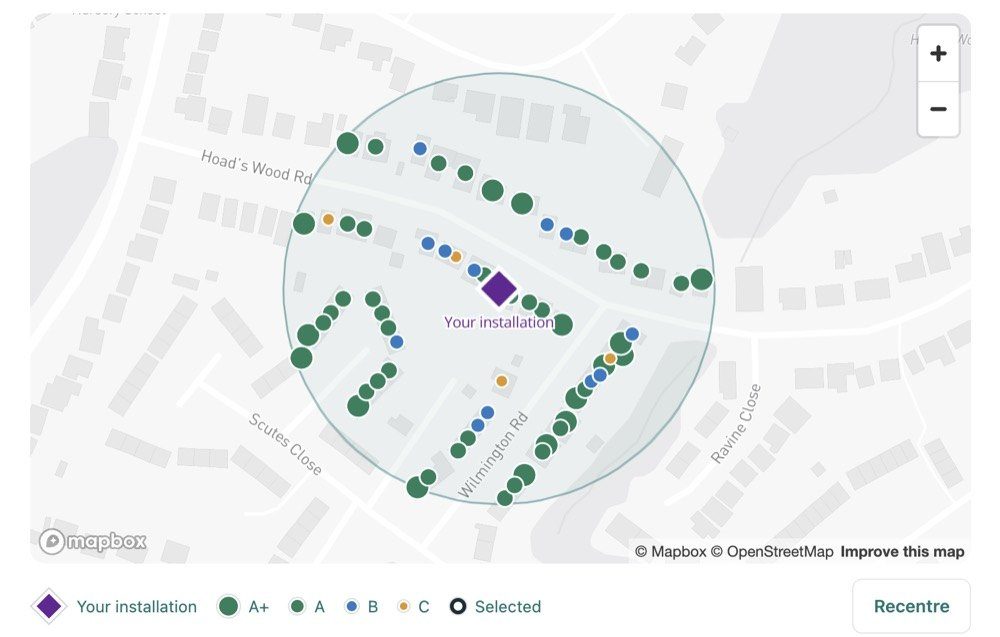
Trade-offs: a letter costs more per piece than a leaflet, and it brings you enquiries, not signed jobs. You still need to answer fast, quote well and close, which is where design software can help. The two do different jobs. For more on the letters see solar direct mail.
What should you do next?
- Work out your cost per installed job for the last six months.
- Find where jobs are lost: before the quote or after it.
- If it is before, fix the pipeline first. If after, look at tools.
Solar Mailshot is opening soon. If more enquiries is your bottleneck, join the waitlist for early access.