
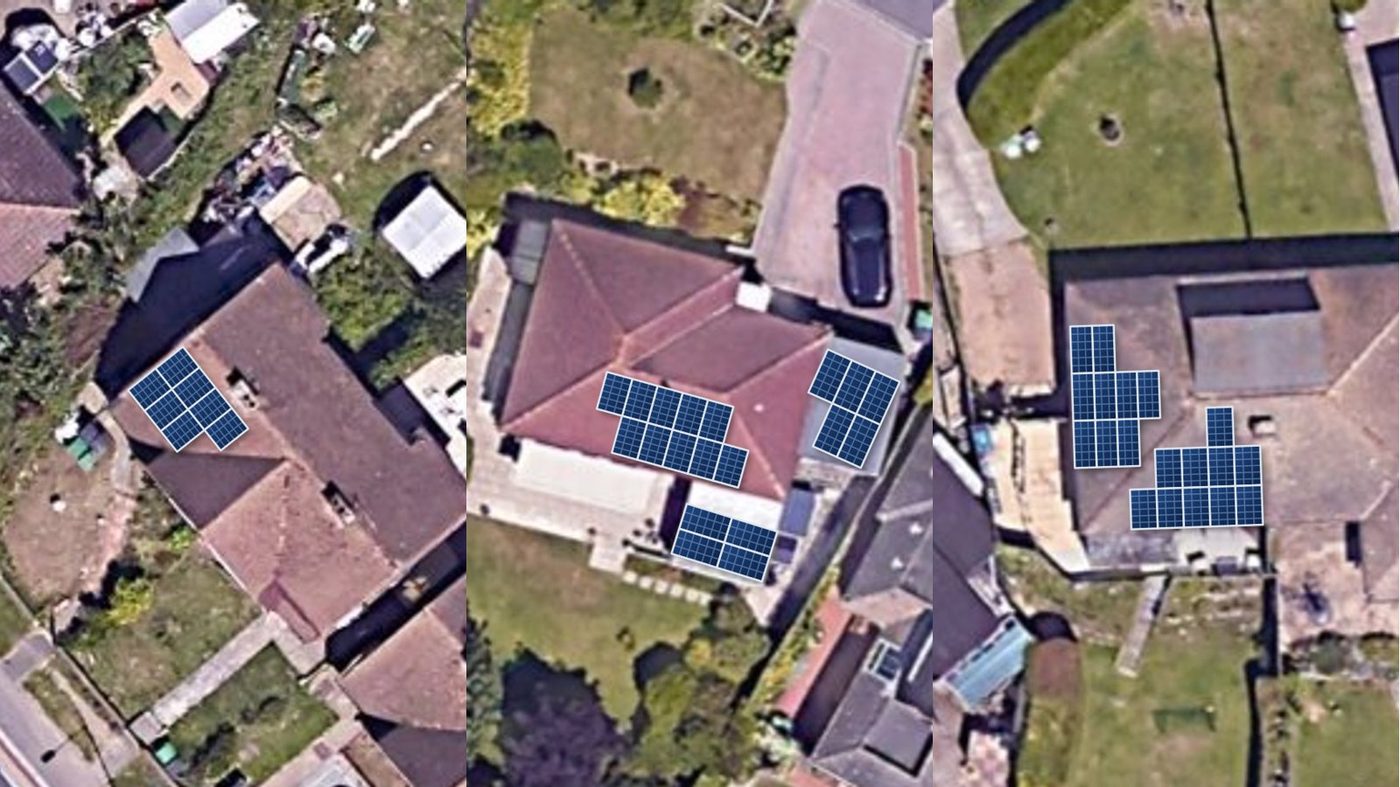
The short answer: solar installations in the UK are at a record, and the government has now published installs by region. Every nation and English region grew over the last year, but the busiest areas are in the South and East. The smart move for an installer is to put your letters where solar is already accepted, then narrow that down to the best roofs street by street.
Disclosure: I run Solar Mailshot, which sells personalised solar direct mail, so I am not neutral. I have kept the facts below to cited sources.
How many solar installations are there in the UK in 2026?
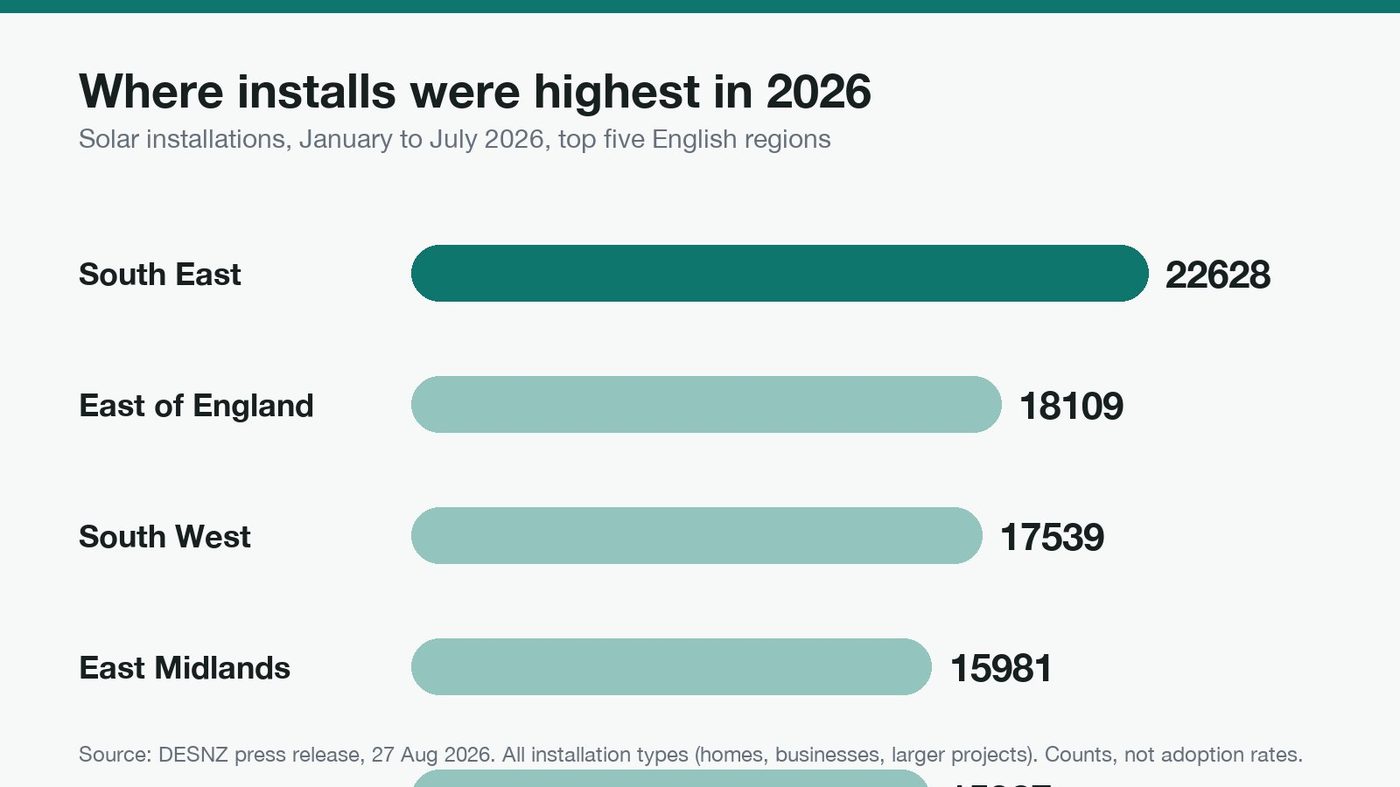
Solar Power Portal reports 291,000 new solar PV installations in the 12 months to August 2026, the most in any 12-month period since 2012 (Solar Power Portal). The same report counts 2,131,000 installations in total across the UK.
The Department for Energy Security and Net Zero (DESNZ) says nearly 172,000 installations were fitted from January to July 2026. Rooftop solar made up more than 7 in 10 of the installations in July (GOV.UK).
These totals include businesses and larger projects, not only homes. For homes alone, Solar Power Portal counts over 1 GW of domestic solar across more than 195,000 homes in the last 12 months.
Which UK regions install the most solar?
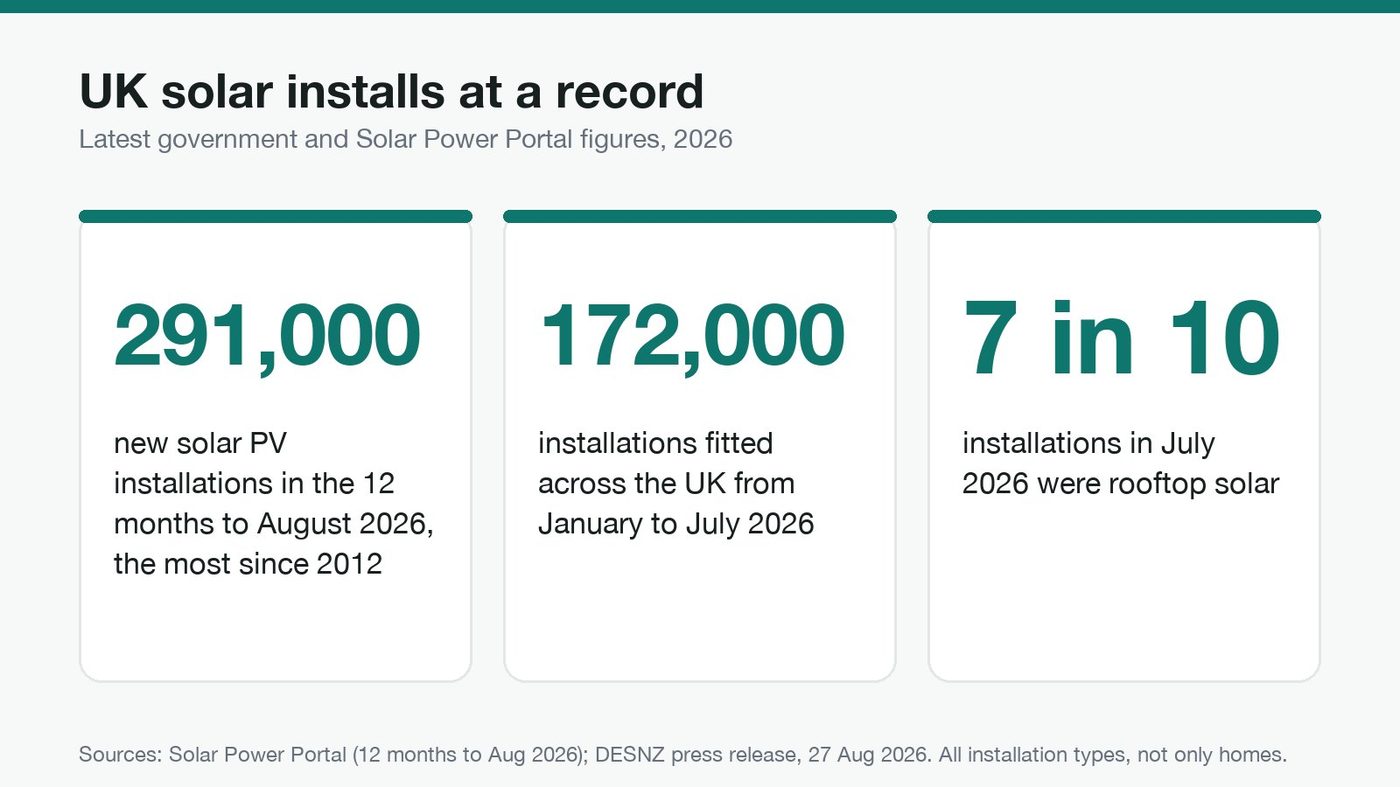
DESNZ published its first regional breakdown on 27 August 2026. These were the top five regions:
| Region | Installs in 2026 so far | Total installs | Change since last July |
|---|---|---|---|
| South East | 22,628 | 305,101 | +14% |
| East of England | 18,109 | 241,195 | +15% |
| South West | 17,539 | 271,400 | +13% |
| East Midlands | 15,981 | 182,606 | +17% |
| North West | 15,927 | 186,253 | +16% |
Source: GOV.UK. The percentage is the increase in the region's total installations since July last year. Elsewhere, Wales rose 18%, Scotland 14% and the North East 11%.
Two cautions before you act on this. These are counts of installations of every type, not the share of homes with solar, so a big region will always rank high. And the release does not break out homes only. Use it as a pointer, not a verdict.
What does a busy region mean for your marketing?
It cuts both ways, so decide which you want:
- Busy, fast-growing areas (the East Midlands and North West grew fastest of the top five): homeowners have seen panels on the next street, so the idea is familiar and the "is this for me?" barrier is lower. But other installers are working these areas too, so a generic leaflet competes with more noise.
- Slower areas (the North East grew 11%): less competition, but more explaining to do. Expect to educate before you sell.
Either way, the region is too blunt. A region has millions of homes, and what decides your quote is the roof on the particular house. Regional data tells you which towns to look at. It cannot tell you which roofs are worth a letter.
How do you find the areas that are most open to solar?
Think in layers, from wide to narrow:
- Region and county: use the DESNZ figures to see where the market is growing.
- Your own jobs: where have you installed in the last 12 months? Homes near a finished job have seen your work, and they are usually the warmest audience. See Tell the Neighbours.
- Postcode areas near you: pick the ones within a realistic drive of your team, so a quote does not cost you half a day.
- The roof itself: orientation, pitch, size and shading decide whether a home is worth mailing at all.
The fourth layer is where most direct mail goes wrong. A postcode sweep reaches flats, shaded roofs and homes that already have panels, and you pay to post to them all.
How Solar Mailshot solves this
This is what our Targeted Mailshot is for. Once you know the area where solar is accepted, you search that postcode, or target up to 15 miles around it, and choose the homes yourself.
| Problem | The usual way | With Solar Mailshot |
|---|---|---|
| Regional data is too broad | Mail a whole postcode and hope | Roofs are graded from LiDAR roof data, so you pick the strongest ones in the area |
| Wasted letters on unsuitable homes | Pay to post to everything | Non-viable homes are removed before you pay |
| Homes with panels already | You find out after posting | After payment each home gets a second, visual check. If panels are spotted the home is removed and the credit goes back to you |
| Generic message | One leaflet for every door | Each letter shows that home's own roof |
| Print and post effort | Do it yourself | We print and post it |
| Competitors in a busy area | Everyone mails the same homes | Each home you mail through Targeted Mailshot is reserved for you for 6 months and removed from other installers' searches. Until someone pays for a home, anyone can see it |
| Commitment | Subscriptions and contracts | Pay as you go: credits from £1.30 to £2.50 each, 1 credit is one printed and posted letter (provisional pricing) |
It is built for scaling. If you want to own a territory, Targeted Mailshot lets you work through it by grade, strongest roofs first, with the reservation applying per home. If you are starting smaller, Tell the Neighbours can reach any home near a job you have just finished, because that is where your work is already visible.
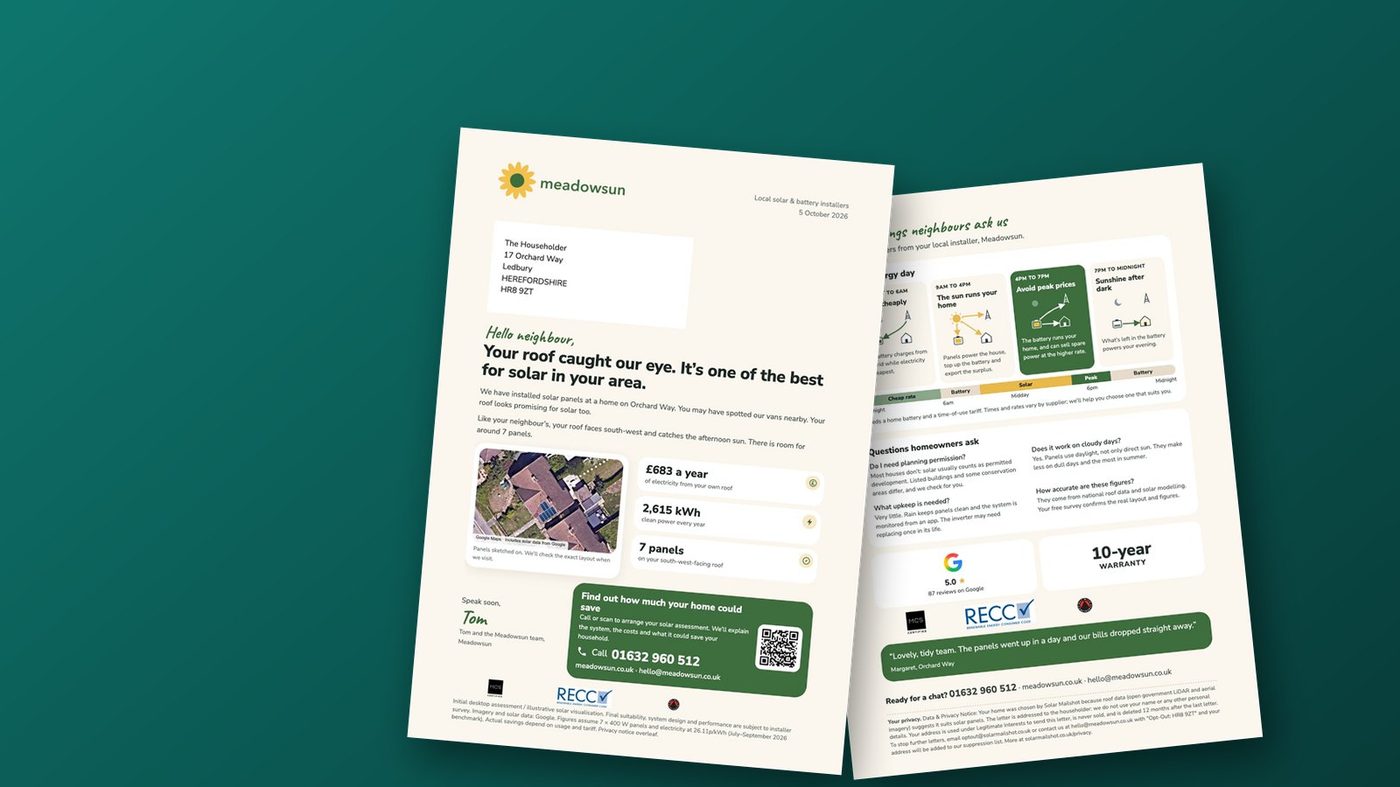
The trade-off is cost per piece. A personalised letter costs more than a leaflet. We think it pays to spend on fewer, better-chosen homes, but we do not promise leads or sales, and I will not quote a response rate for it. See what a solar lead really costs for how to judge any channel by cost per installed job.
What about plug-in solar?
DESNZ says plug-in solar panels are now legal across Great Britain, and that Currys, B&Q, Screwfix and Amazon are preparing to sell them (GOV.UK). I have not seen figures on how many homes will buy them, so treat any prediction with caution.
What it does mean is that more households will be talking about solar. For an installer, the practical response is to be clear about what a full roof system offers: a design for the whole roof, a battery option and MCS-certified work. Put that in your letter, and keep it factual.
A simple plan for your next 30 days
- Choose one or two areas using the layers above.
- Count your last 12 months of installs there, and list the roads.
- Mail the neighbours of those jobs first.
- Add graded roofs from the wider area, strongest grade first.
- Track enquiries to quotes to installed jobs, so you can judge the area by cost per installed job.
Solar Mailshot is opening soon. If you want to target the places where solar is already accepted, join the waitlist for early access, and see how solar direct mail works.