
The short answer: plug-in solar UK installers are now hearing about is a different product to a roof system. An 800W kit powers a home's background load and needs no installer, so it mostly reaches renters and flat owners. Expect more questions from homeowners, not an overnight loss of roof customers.
Disclosure: I run Solar Mailshot, which sells personalised solar direct mail, so I am not neutral. I have kept the facts below to cited sources.
What do the plug-in solar rules allow?
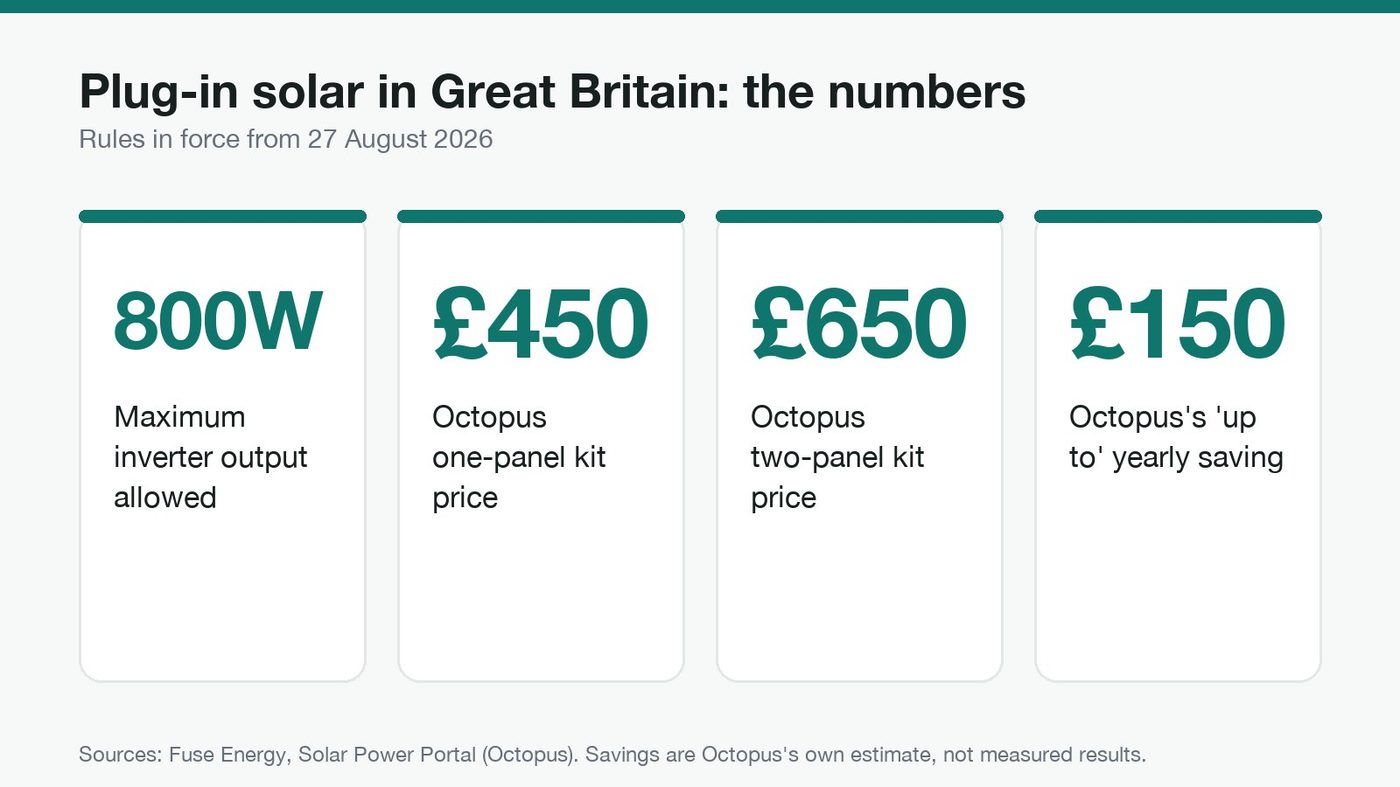
Plug-in solar became legal in Great Britain on 27 August 2026. Fuse Energy summarises the main rules: an 800W maximum output, products listed on the Energy Networks Association's G98 Type Test Register, anti-islanding protection, a direct plug into a suitable wall socket (no extension leads) and RCD protection on the circuit. Households must notify their network operator (Fuse Energy).
No installer is needed. That is the point of the product, and it is why it will not replace your work: nobody is buying a kit instead of a roof survey, a design and an MCS-certified install.
What will plug-in kits cost, and who sells them?
Octopus Energy launched kits at £450 for one panel and £650 for two, including VAT and delivery. They use 460W panels with a mount, micro inverter and 5m lead, and Octopus says set-up takes about an hour. It describes them as aimed at renters, flat owners and homes without a suitable roof. Octopus estimates savings of up to £150 a year, and about 5.5 years to pay back the two-panel kit on a smart export tariff (Solar Power Portal). Those are Octopus's own estimates, not measured results.
Certified kits are also sold through retailers including Amazon, Argos, B&Q, Currys, Screwfix and Wickes, plus British Gas (Money to the Masses).
Do plug-in kits compete with roof solar?
Mostly not, for three reasons.
- Size: the kits run background loads such as fridges, routers and TVs, and Octopus says they cannot run heavy loads like showers, ovens or EV chargers. A roof system with a battery is built for the whole home.
- Customer: the target is people a roof installer cannot serve today, such as renters and flat owners.
- Demand: Solar Power Portal counts 291,000 new installations in the 12 months to August 2026, the most in any 12-month period since 2012 (Solar Power Portal). Those are all installation types, so treat it as a sign of a busy market, not your own pipeline.
The honest risk is at the small end: a homeowner with a modest bill who might have asked for a quote may try a £450 kit first. Some will come back wanting more.
What questions should you expect from homeowners?
| Question | A straight answer |
|---|---|
| "Can't I just buy a kit for £450?" | Yes, and it will cut background use. It is not sized for a whole home and does not include a battery or heavy loads. |
| "Do I need an installer for yours?" | Yes. A roof system needs a survey, design, certification and grid paperwork. |
| "Will a kit affect my roof quote?" | No. You can treat them as separate products. |
| "Is it worth waiting?" | Do not promise savings you cannot support. Base figures on their own roof and usage. |
Answer in a sentence in your letters and on calls. Do not criticise the kits: they are legal, and being fair builds trust.
How should you position a roof system against a £450 kit?
- Lead with the home. A kit is generic. A quote based on this roof and this usage is not.
- Talk about what a kit cannot do: heavy loads, a battery and a system sized to the household.
- Be clear on who each is for. Say plainly that a kit suits a renter and a roof system suits an owner with a good roof.
- Mind your claims. Use your own design figures, not a vendor's national averages. See what a lead really costs for judging spend by cost per installed job.
How Solar Mailshot solves this
The risk from plug-in kits is generic, cheap solar in the news pushing homeowners to think "solar is a £450 gadget". The fix is to reach the right homes with something specific.
| Problem | The usual way | With Solar Mailshot |
|---|---|---|
| Homeowners compare you to a £450 kit | Generic leaflet, no roof detail | Each letter shows the home's own roof |
| Mailing homes that suit a kit, not a roof | Wide leaflet drops | Roofs graded from LiDAR roof data, non-viable homes removed before you pay |
| Waiting for enquiries | Referrals or shared leads | We print and post letters to homes you choose |
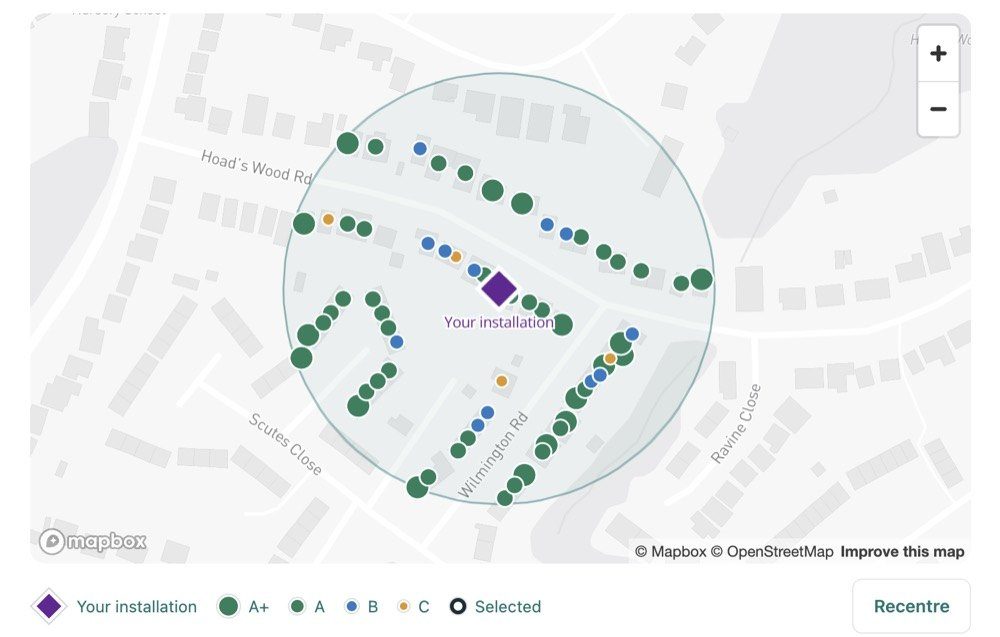
| Using proof you already have | Finished jobs go unmentioned | Tell the Neighbours: the best 30 roofs on your install's road for £75 (30 letters at the standard rate, provisional pricing) |
| Commitment | Subscriptions, contracts | Pay as you go: credits from £1.30 to £2.50 each, 1 credit is one printed and posted letter |
Trade-offs: a letter costs more per piece than a leaflet, and it brings enquiries, not signed jobs. You still need to answer quickly and quote well. See solar direct mail for how the letters work.
What should you do this week?
- Write a two-line answer to "what about plug-in solar?" and use it on calls and quotes.
- Add one line to your letters or website about what a roof system does that a kit cannot.
- Keep marketing to owner-occupied homes with good roofs.
Solar Mailshot is opening soon. Join the waitlist for early access.